Scribing
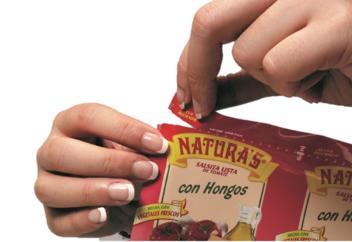
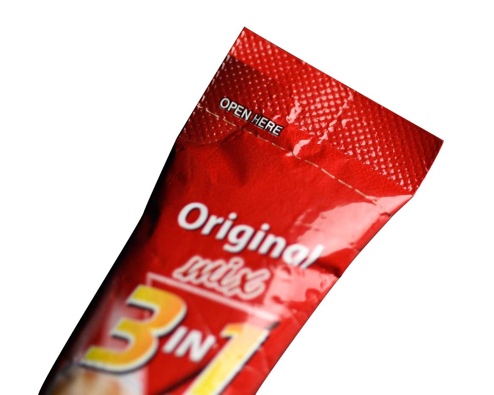
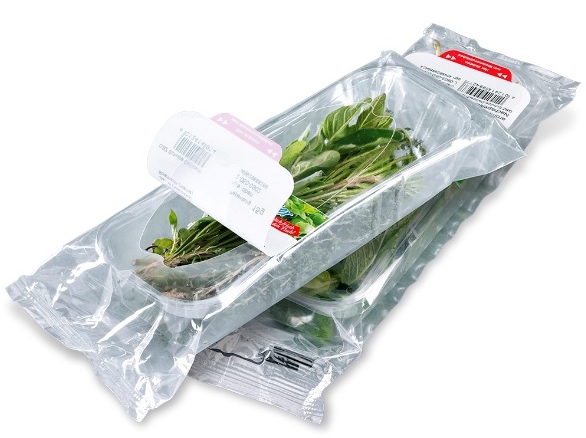
Intelligent packaging is easy to open. The best solution is a defined scribing structure, which allows a controlled tear off by the user. Laser-scribed lines have an even melted edge, which results in a precise scribing structure. At the same time, the surrounding material remains tear-resistant. The result is packaging that your customers will like opening.
Slitting
Outer packaging for kitchen roll, toilet paper etc. is usually made from PE film. This is very elastic and is hard to open without slits. Lasers are used to make cuts with any spacing and length following a predefined contour. So the packaging can easily be opened for removal of the individual products.
PP film, for example, is used for the outer packaging of tissues. Thanks to the slits and precise coordination of the cut-to-land ratio, after tearing along the lines, consumers are left with an opening that enables them to remove the little packs of tissues individually.
Perforation
Micro perforation 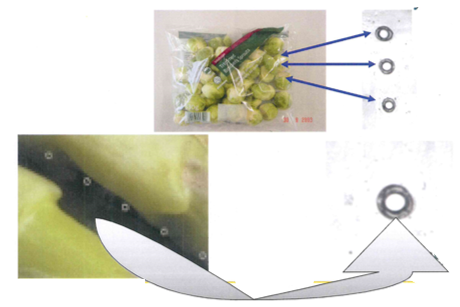
In perforation, the laser beam produces microscopically small holes without contact, with a diameter from 60 μm to approx. 200μm and larger, depending on individual requirements.
Besides the laser parameters, such as pulse peak power, pulse duration and wavelength, the different films and film composites are also influencing factors.
A brief laser pulse with high power density applies the energy to the film very quickly for perforation. This vaporises the material with little material melt out at the edge. The greater the pulse energy, the more the material melts and vaporises.
WSC – precise perforation !!!
One special feature is laser processing with so-called WSC technology (web speed compensation), which synchronises a highly dynamic deflection mirror with the film web for the duration of the pulse. This results in evenly round holes at web speeds up to 400 m/min. Even if the speed changes during acceleration, our technology facilitates consistent quality.
Macro perforation
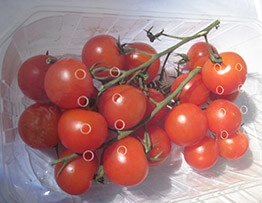
With macro perforation, the beam is guided by mobile mirrors, the so-called scanner technology. The laser beam is guided by changing the angle of the mirrors. A processing field is created.
On a 2-axis scanner, the laser beam is focused using a far-field lens (f-theta objective) or a lens system at the processing level.
On the 3-axis scanner, a linear movable lens is used for focusing, which diverges the beam. The laser beam is focused at the processing level using either one or two focusing lenses.
This enables highly dynamic and precise film cutting.
Benefits:
- precise fused cut edges, leaving no film remnants in the form of threads, as is sometimes the case with punching.
- 100 % extraction of the cut-outs thanks to specially developed extraction technology.
- flexible cut-outs in position and form.
Matrix perforation

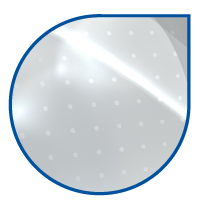
Several processes have developed from the basic principle of single perforation.
One of these processes is scanner technology.
Scanner technology
Galvanometer scanners are highly dynamic drivers with digital position sensors for precise positioning of the laser beam. The laser is precisely guided for the applicable hole position using a mirror attached to the galvanometer scanner. A second galvanometer scanner ensures full web speed compensation, by synchronising the beam with the film web.
Window-cutting
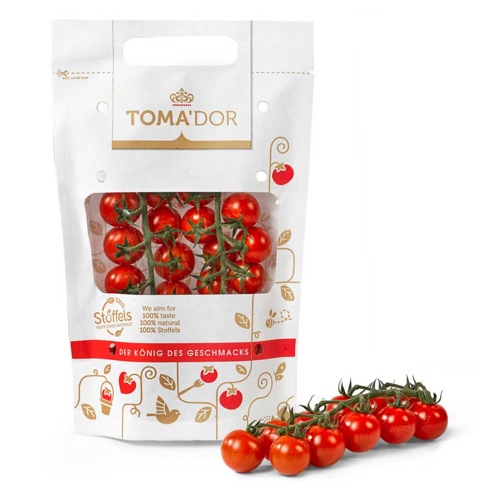
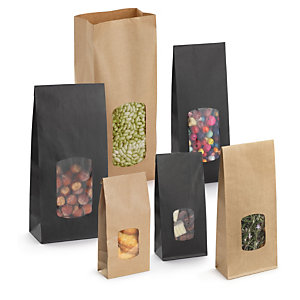
Window-cutting is the perfect process for showing consumers the packaging content. The process is easily explained: a laser system for cutting paper is integrated into a laminating system. First, a laminating adhesive is applied to the reverse of a paper web. This paper web then runs through the laser system and as many window contours as required are cut out. A film web, which runs in sync with the paper web, is joined to the paper web via guide rollers, resulting in a paper-film composite with windows.
Windows are also cut in films for special applications.
LANG customers profit from the broad range of system technology, process know-how and services for an array of applications. Window-cutting, for example, makes use of extraction technology specifically developed by LANG to deal with sticky cut-outs. The customer’s operation is reliable and highly productive as a result.
Window-cutting usually uses laser power in the range of 300 to 600 watts.
Benefits
- from simple geometries to complex cut-outs
- perfect cut quality
- highly precise
- high process speeds
- reliable extraction of sticky cut-outs
- wide range of materials from different types of paper and film
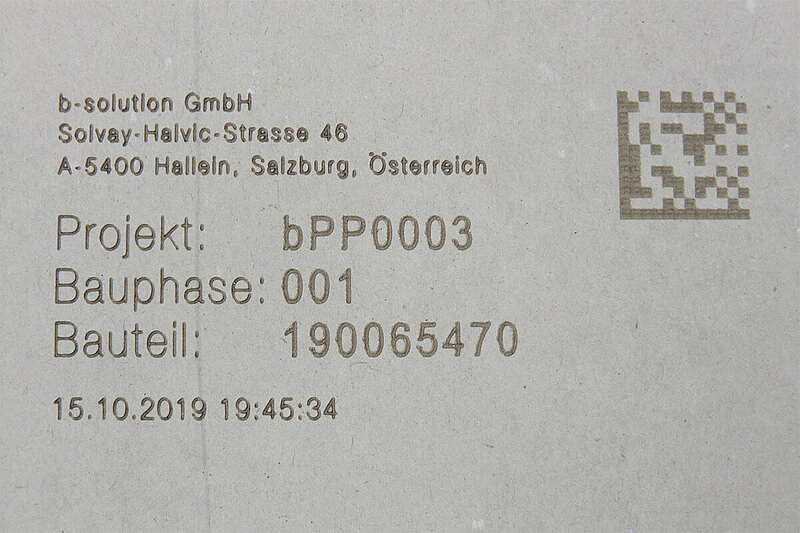
Marking
Structuring visual
Laser systems for flexible packaging
FlexLas Liner WD visual
FlexLas Liner – a technology that gives you the finest scribed lines in the material at high speed. The process runs in the web direction. The system is very flexible and, in addition to almost invisible scribed lines, can also be used for line segments, cut lines or perforations.
Precise and fast
FlexLas Liner – a technology that gives you the finest scribed lines in the material at high speed. The process runs in the web direction. The system is very flexible and, in addition to almost invisible scribed lines, can also be used for line segments, cut lines or perforations.
Overview
Feature | Specification |
Economical high-speed processing | High process speeds with virtually invisible scribed lines. Individual laser sources with precise fixed optics produce scribing or perforation patterns through dedicated focusing optics. Patterns can be synchronized with the printed film when required. |
Unrestricted line spacing | Laser units are arranged on two or more levels in the machine direction and can be motor-positioned across the entire web width, allowing flexible line placement according to customer requirements. |
Complete LANG LASER configuration | Fully equipped laser system compliant with CE requirements and Laser Safety Class 1. The configuration includes an enclosure, extraction system, sensors, web-guide rollers and safety technology. It operates independently and can be integrated into existing slitter-rewinders or winders. |
Easy operation and programming | Laser parameters are defined through a material database. |
Job-data storage | Job data can be stored, with position corrections performed before or during production using jog functions. |
Fast integration and commissioning | Can be integrated into a slitter-rewinder and operated independently within a few seconds, enabling high-quality applications. |
Technical data
Parameter | Specification |
Applications | Scribing in the machine direction using continuous or interrupted lines, also available with multi-focus optics; perforations, cut lines or cut-line segments, optionally synchronized with the printed film. Each laser unit can perform different applications, providing high flexibility. |
Materials | All commercially available packaging materials, including composite films, monofilms, mono-material film composites, recyclable films, bio-based films, paper and cardboard composites |
Number of processing lines | 1–6 lines; up to 48 lines with the optional MFO system |
Laser output | 30–600 W; pulse peak power: 1,800 W |
Wavelengths | 9.3 / 10.25 / 10.6 µm |
Web width | Less than 1,800 mm; larger widths available upon request |
Web speed | Less than 700 m/min, depending on the material |
Laser safety class | Class 1 |
Typical integration | Slitter-rewinders and winders |
FlexLas Perfo
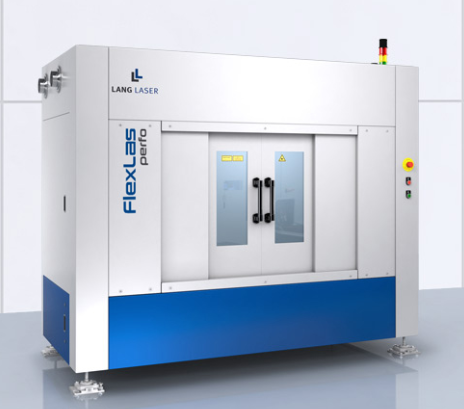
With the FlexLas Perfo combined with our proven WSC (web speed compensation) module, LANG offers you a solution for innovative applications, which offers many possibilities for the exchange of gases (MAP), pressure compensation or dosing of liquids/gases and ripening processes.
Precise and fast
The packaging industry’s requirements are growing in terms of exact compliance with hole size for perforation. Thanks to a variety of imaging systems and laser wavelengths, hole diameters ranging from a few µm to several millimetres can be achieved. With the FlexLas Perfo combined with our proven WSC (web speed compensation) module, LANG offers you a solution for innovative applications, which offers many possibilities for the exchange of gases (MAP), pressure compensation or dosing of liquids/gases and ripening processes.
As a pioneer in the micro perforation of packaging materials with around 20 years’ experience, we pass on our know-how so that you can benefit from reliable, highly precise and highly productive laser systems for industrial production.
Overview
Feature | Specification |
Round holes at high process speeds | The proven WSC (Web Speed Compensation) module—also known as “mark on the fly”—produces circular holes with the required diameter and pattern, even at high web speeds. |
High flexibility | Individual laser sources are securely mounted on the WSC module, supporting both perforation and scribing. In its home position, the WSC module operates as a fixed-optics system. Each laser unit can be controlled independently for either perforation or scribing. |
Economical entry-level model | Available in various configurations according to application requirements. Its modular design and the ability to retrofit individual perforation units allow customized system configurations. |
High performance | Innovative lens systems and intelligent functions enable highly precise microperforation with different hole diameters. |
High process reliability | An optional inspection system monitors and controls the hole diameter, ensuring consistent quality and increased production reliability. |
Fast integration and commissioning | Can be integrated into a slitter-rewinder or winder and operated independently within seconds, enabling high-quality microperforation. |
Technical data
Parameter | Specification |
Applications | Microperforation in the machine direction, producing perfectly round holes even at high web speeds; combined scribing and perforation available upon request |
Scope | Flexible materials used to package food, cosmetics, pharmaceuticals, consumer goods (non-food), baked goods, beverages and industrial products |
Materials | All flexible materials, including mono- or composite polymer films, metallized films, metal-composite films, laminated or extrusion-laminated materials, paper, cardboard, biodegradable films and other web materials |
Number of processing lines | 1–16 lines; optional matrix perforation |
Laser output | 60–600 W; pulse peak power: 1,800 W |
Wavelengths | All wavelengths provided by available laser sources. The material must absorb the corresponding wavelength, even if only to a very limited extent. |
Web width | Less than 1,800 mm; larger widths available upon request |
Web speed | Less than 600 m/min, depending on the material |
Laser safety class | Class 1 |
Typical integration | Slitter-rewinders and winders |
FlexLas Contour CW
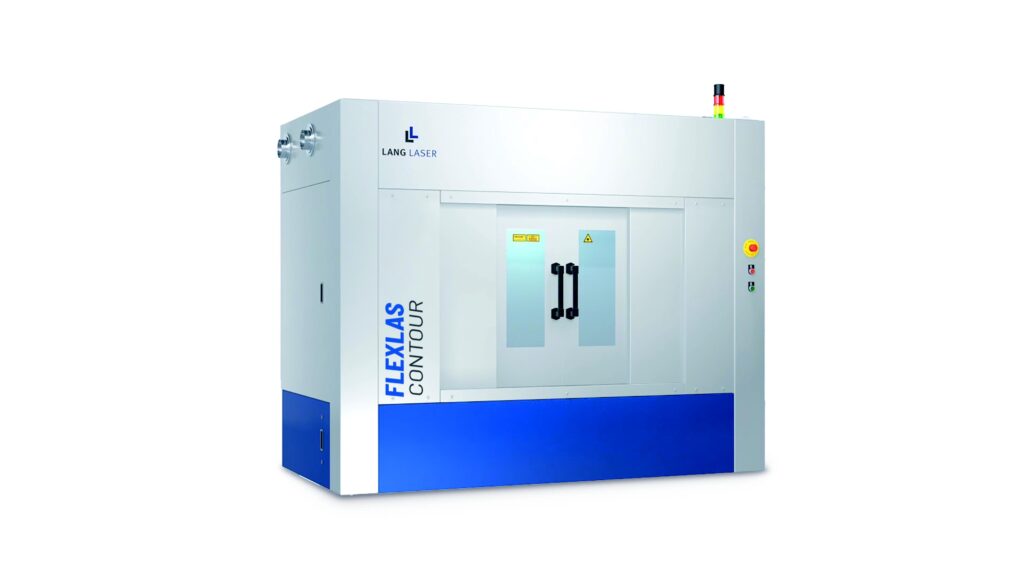
Scribing is also often effected across the direction of the web, i.e. “cross web”, or CW for short. An array of applications can be realised by synchronising the scribed lines to the print mark: from simple lines to complex contours for resealable flaps. Diagonal and semicircular openings can also be produced with the highest precision.
Flexible and versatile
Scribing is also often effected across the direction of the web, i.e. “cross web”, or CW for short. An array of applications can be realised by synchronising the scribed lines to the print mark: from simple lines to complex contours for resealable flaps. Diagonal and semicircular openings can also be produced with the highest precision.
Feature | Specification |
Performance | Highest dynamics and excellent processing results |
Digitally controlled optical modules | Provide extremely high beam-deflection speeds while ensuring high accuracy, minimal spot diameters and compliance with application-specific quality standards |
Short setup times for complex applications | Motorized laser-scanner units automatically move to the correct positions and load the relevant process parameters when a stored job is selected. Production can therefore resume within a few minutes after a job change. |
Complete LANG LASER configuration | Fully equipped laser system compliant with CE requirements and Laser Safety Class 1. The configuration includes an enclosure, extraction system, sensors, web-guide rollers and safety technology. |
System integration | Operates independently and is ready for integration into existing slitter-rewinders or winders |
Parameter | Specification |
Applications | Scribing, perforating or cutting with continuous or interrupted lines in the web direction (WD), cross-web direction (CW) or with complete contour freedom. Each laser-scanner unit can perform different applications, providing high flexibility. |
Precision | Print synchronization accuracy of less than 0.5 mm, even at high web speeds |
Materials | All commercially available packaging materials, including composite films, monofilms, mono-material film composites, recyclable films, bio-based films, paper and cardboard composites |
Number of laser-scanner units | 1–8 units |
Laser output | 30–600 W; pulse peak power: 1,800 W |
Wavelengths | 9.3 / 10.25 / 10.6 µm |
Web width | Less than 1,800 mm; larger widths available upon request |
Web speed | Less than 700 m/min, depending on the material |
Laser safety class | Class 1 |
Typical integration | Slitter-rewinders, winders and printing machines |
FlexLas Combi CW/WD
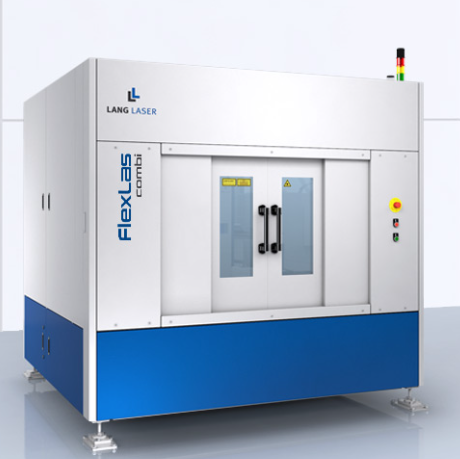
Combines the two processes of FlexLas Liner and FlexLas Contour. The laser beam is reflected via a mirror system into a beam deflection unit or into the plane with one or more focusing heads.
Always the best choice
Combines the two processes of FlexLas Liner and FlexLas Contour. The laser beam is reflected via a mirror system into a beam deflection unit or into the plane with one or more focusing heads.
This facilitates the finest scribed and perforated structures in the web direction, or cross-web applications and complex contours. FlexLas Combi is the optimal solution for a broad range of applications.
Overview
Feature | Specification |
Limitless possibilities | The combination of different optical systems, beam-deflection units and laser sources within a single machine provides maximum contour freedom, flexibility and processing quality. This multifunctional, future-proof solution can accommodate a broad range of customer-specific requirements. |
Easy operation | Switches automatically between the capabilities of FlexLas Liner and FlexLas Contour at the touch of a button. |
Programming software | MetroFlex software provides fast, intuitive and user-friendly programming. |
High economic efficiency | Flexible operation and a broad application range enable high machine utilization. |
Reliable functionality | Automatic execution of numerous tasks saves time and reduces the risk of errors. |
Complete LANG LASER configuration | Fully equipped laser system compliant with CE requirements and Laser Safety Class 1. The configuration includes an enclosure, extraction system, sensors, web-guide rollers and safety technology. |
System integration | Operates independently and is ready for integration into existing slitter-rewinders or winders. |
Technical data
Parameter | Specification |
Applications | Combines the FlexLas Liner and FlexLas Contour processes, providing maximum freedom and flexibility with excellent processing quality. Supports combinations of scribing, perforating and cutting with continuous or interrupted lines in the web direction (WD), cross-web direction (CW) or with complete contour freedom. |
Materials | All commercially available packaging materials, including composite films, monofilms, mono-material film composites, recyclable films, bio-based films, paper and cardboard composites |
Number of laser-scanner units (CW) | 1–4 units |
Number of laser-focusing units (WD) | 2–12 units |
Laser output | 30–600 W; pulse peak power: 1,800 W |
Wavelengths | 9.3 / 10.25 / 10.6 µm |
Web width | Less than 1,800 mm; larger widths available upon request |
Web speed | Less than 700 m/min, depending on the material |
Laser safety class | Class 1 |
Typical integration | Slitter-rewinders, winders and printing machines |
FlexLas Window
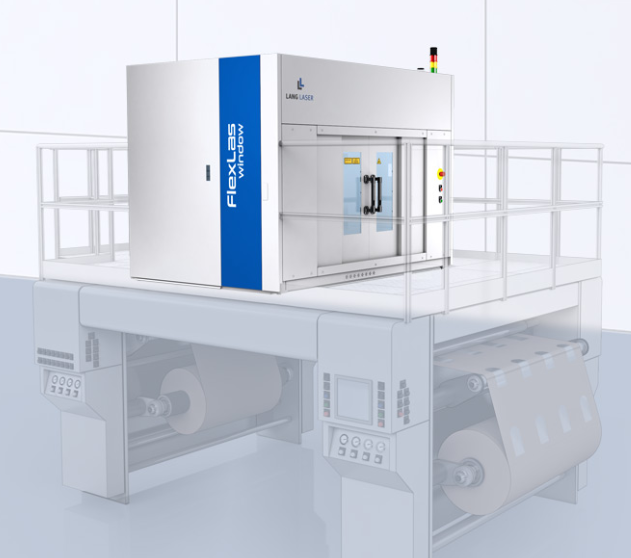
The FlexLas Window efficiently cuts as many contours as the customer requires, in high quality and with perfect edges – and regardless of the complexity of the contours.
For perfect edges
During lamination, packaging webs are joined together using a bonding agent. First, an adhesive is applied to the substrate web, consisting of paper or plastic film. This substrate web then runs through the FlexLas Window, which efficiently cuts as many contours as the customer requires, in high quality and with perfect edges – and regardless of the complexity of the contours.
The second web is then pressed against the first to form a duplex or two-layer laminate. The result is attractive packaging that allows the consumer to view the contents through the window. This window technology is also used in the medical sector for the removal of sterile products.
Overview
Feature | Specification |
Easy integration | Can be easily integrated into all standard laminating systems available on the market. |
Complete solution | Adhesive-bonded cut-outs are reliably extracted from the laser-processing area and transferred accurately to the pre-separator. |
Substrate compatibility | Provides excellent processing results regardless of the type of paper or film used. |
Convenient operation | Laser-scanner units are motorized across the web width. The jog function allows cut-outs to be positioned and adjusted without stopping the web. |
Complete LANG LASER configuration | Fully equipped laser system compliant with CE requirements and Laser Safety Class 1. The configuration includes an enclosure, a specially designed extraction system for adhesive cut-outs, sensors, web-guide rollers and safety technology. |
System integration | Operates independently and is ready for integration into all standard laminating systems. |
FlexLas Pouch
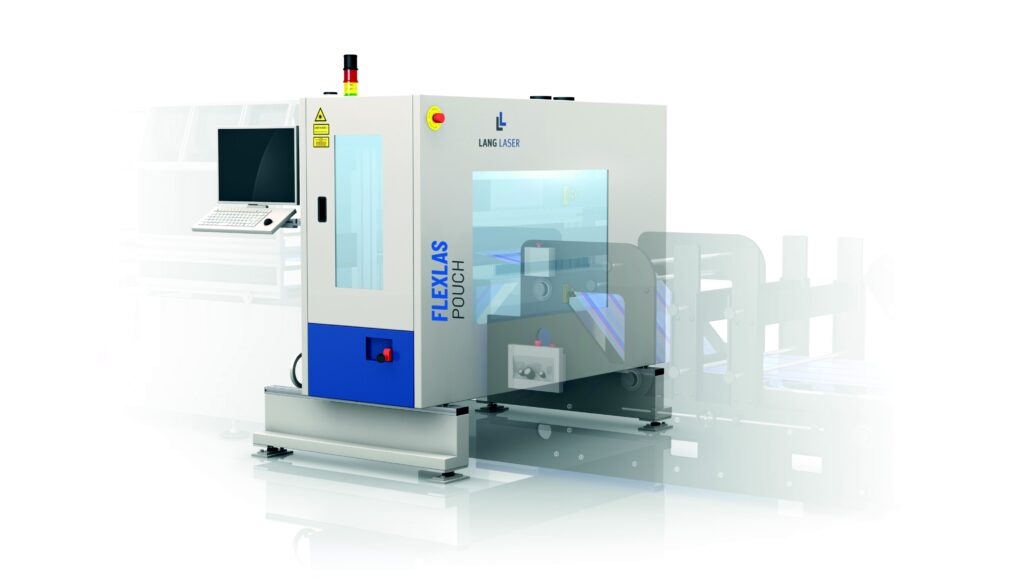
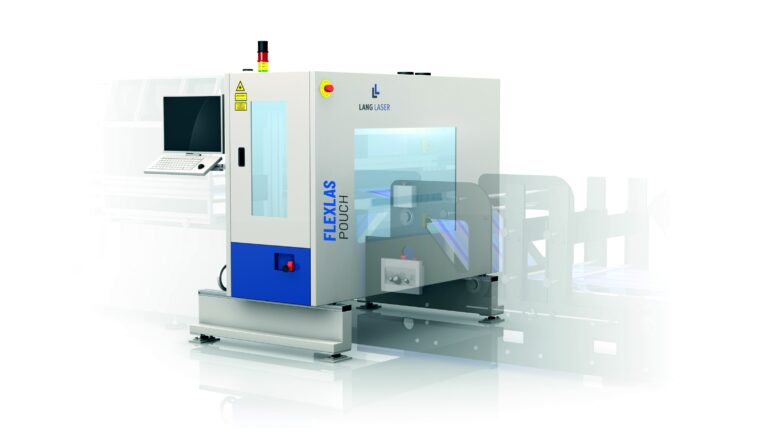
You are perfectly equipped with the FlexLas Pouch – whether you want to scribe lines or contours. Integrated into all standard bag machines, the FlexLas Pouch is used after folding of the flat film. The scribed lines are then applied congruently from the front and back, guaranteeing easy opening of the bag.
High-quality laser processing
You are perfectly equipped with the FlexLas Pouch – whether you want to scribe lines or contours. Integrated into all standard bag machines, the FlexLas Pouch is used after folding of the flat film. The scribed lines are then applied congruently from the front and back, guaranteeing easy opening of the bag.
Overview
Feature | Specification |
Cost-effectiveness | Lower web speeds on pouch-making machines allow lower laser power to be used while maintaining high-quality laser processing. |
Full flexibility | Supports continuous, dashed or dotted scribed lines, providing high-quality opening performance even with innovative composite films. |
Maximum repeatability | Maintains consistent scribing depth during both intermittent and continuous web operation. |
Fast integration and commissioning | Can be integrated into a pouch-making machine and operated independently within seconds, enabling high-quality applications. |
Technical data
Parameter | Specification |
Applications | Simultaneous scribing of continuous or interrupted lines on the front and back of a pouch. An optional scanner enables simple shapes such as diagonal lines or arcs. Synchronization with the printed film is available when required. |
Materials | All commercially available packaging materials, including composite films (PET/Al/PE, PET/PE, OPA/PE, etc.), mono-material film composites (MDO-PE/PE, HDPE/PE, OPP/PP, etc.), recyclable films, bio-based films and paper composites |
Number of processing lines | 2 lines; up to 6 lines with optional multi-focus optics (MFO) |
Laser output | 30–200 W |
Wavelengths | 9.3 / 10.25 / 10.6 µm |
Web width | Independent of web width |
Cycle rate | Up to 150 cycles/min |
Laser safety class | Class 1 |
Typical integration | Compatible with all standard pouch-making machines available on the market |
Special features | Compact design, straightforward integration and a cost-effective configuration; simple software with optional double-spot or multi-focus optics (MFO) |
Winder with integrated laser system
LasWinder 400
The LasWinder 400 is a wrapping machine with integrated laser units. You can scribe, perforate, cut, mark or structure flexible materials. The modular design of the machine and the option of individual equipment and retrofitting give you maximum adaptability to your range of applications.
The LasWinder is more than just a winder with integrated laser system.
Productivity, availability, flexibility and quality are important features. We offer a broad range of additional services for your machines to guarantee these features and, thus, your long-term success. Choose a LasWinder and you too can profit from these options individually tailored to your needs.
- Effective extraction solutions for scribing and perforation, including extraction of cut-outs
- Effective extraction when ablating contours from the surface
- Ejection of acceptable parts
- Automation solutions
- Material flow simulation, i.e. connectivity of upstream and downstream processes
We offer highly efficient complete solutions tailored to your needs and your customers’ requirements.
Overview
Feature | Specification |
Customizable design | The modular architecture and retrofit capability of the laser units enable configurations tailored to specific customer requirements. |
Reliable operation and robust design | The user-friendly control system automates numerous tasks, saving time and reducing errors. LasWinder delivers consistent quality and accuracy. |
Easy operation | The machine is easily accessible and requires minimal changeover time. The laser-processing area is accessed through an automatically controlled protective enclosure. |
Optimal processing results | A dancer-roller system and highly accurate web-tension control enable the reliable processing of sensitive materials. |
Technical data
Parameter | Specification |
Materials | All commercially available packaging materials, all types of paper, cardboard composites and laminates |
Material width | 300–800 mm |
Unwinding roll diameter | Maximum 850 mm |
Finished roll diameter | Maximum 850 mm |
Machine speed | Maximum 400 m/min |
Laser features | Variable laser output and wavelength; scanner technology, fixed optics and polygon scanner |
Laser systems to produce and finish folding boxes
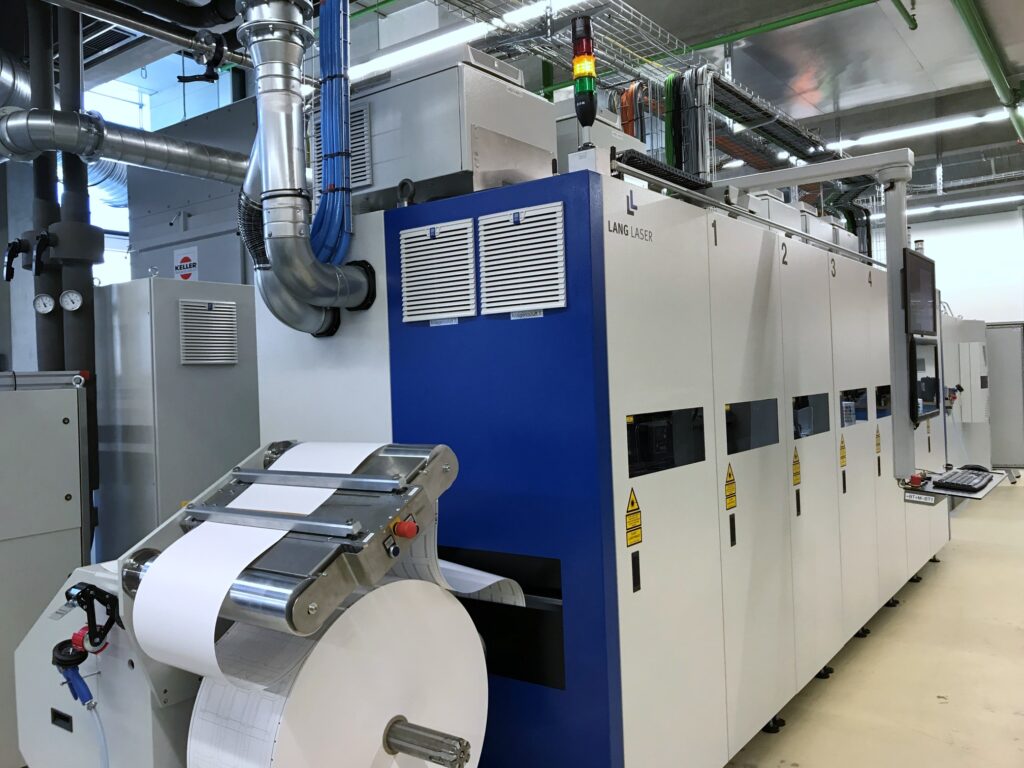
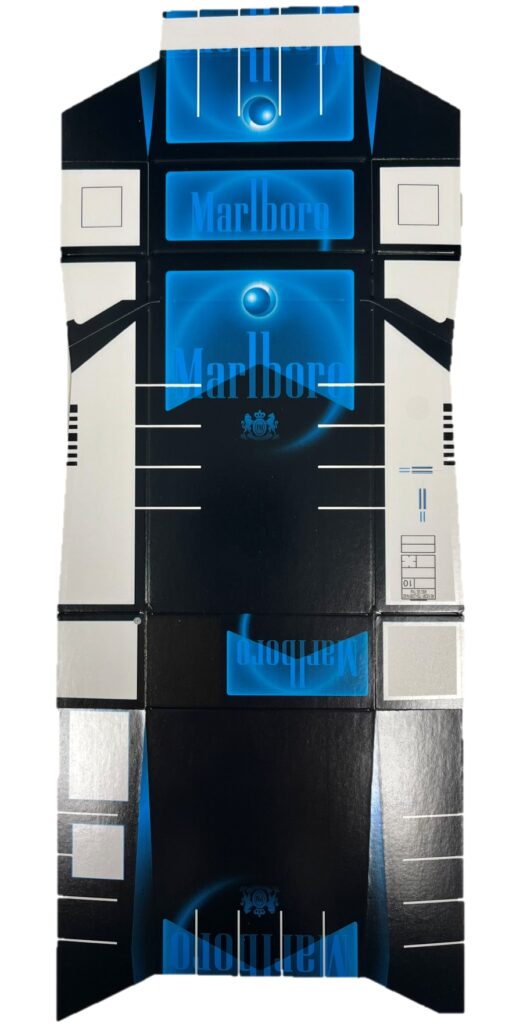
LANG LASER delivers highly innovative laser technology for the production of folded boxes. The big advantage lies in the digital illustration of cutting and folding line processes. With the quick dynamic mirror beam scanning system the laser beam is exactly guided to the scribing, cutting, and engraving position on the cardboard web with extremely high speed. The lines and contours are created by a special graphics software, which is especially developed for these processes. The production of folded boxes is absolutely digital thanks to those of LANG LASER developed laser technology and allows quick product changes, short processing time and high flexibility. The system offers creasing and cutting production with high quality and high speed. It is also possible to realise very decorative cut-outs or engraving in the same working flow. Various printing companies and converters trust in our technology.
Your Advantages
- No Die systems, no tools
- No special plates
- Lower production cost and higher availability of the machine
- Higher flexibility and quick delivery time (Just in Time)
Quick programming, functional and beautiful packaging
CartoLas Singular
The CartoLas Singular is ideal for the production of folding box prototypes. It can also be used profitably for small batch sizes, is easy to program and can be used without specialist laser knowledge.
The CartoLas Singular is a fully equipped laser machine, compliant with laser safety class 1 and with CE. This also includes extraction, housing and security technology to LANG LASER standards.
The CartoLas Singular is used for processing and functional testing in the production of folding box prototypes. This allows the customer to review requirements and transfer data to a fully automated series machine.
Overview
Feature | Specification |
Digital production and unrestricted design freedom | Laser technology eliminates the need for mechanical cutting dies or creasing tools. Cutting, scribing and marking contours can be created without design limitations. Surfaces with different tactile properties and three-dimensional effects can also be produced. |
Easy operation and programming | External CAD data—ranging from simple geometries to intricate cut-outs—can be imported or created directly through the control unit using intuitive programming tools. |
Production from prototypes to series | CartoLas Singular supports the digital production of folding cartons, from individual prototypes to larger production runs. |
High processing quality | Digitally controlled optical modules provide extremely high beam-deflection speeds, ensuring high accuracy, minimal spot diameters and compliance with application-specific quality standards. |
Adjustable working area | Flexible height adjustment of the laser-scanner unit allows different working fields to be selected at the touch of a button, optimizing processing quality for different carton sizes. |
Dust- and smoke-free processing | A powerful surface-extraction system prevents dust and smoke from affecting the laser beam or workpiece, ensuring consistent processing quality. |
Technical data
Parameter | Specification |
Applications | Scribing, cutting, perforation, surface ablation, structuring and marking |
Materials | Cardboard, paper, films and composite materials; leather available upon request |
Working area | Variable working area of up to 1,000 × 1,000 mm |
Laser output | 300–1,000 W; pulse peak power: 1,800 W |
Wavelengths | 9.3 / 10.25 / 10.6 µm |
Laser safety class | Class 1 |
Material processing solutions for integration into existing production lines.
Thousands of LaserLine modules, based on CO2 laser beam sources from LANG, scribe, cut and perforate packaging for food, as well as technical and medical products all over the world. Our customers value LaserLine modules because of their high reliability – even for applications that are more robust. LANG LaserLine modules can be configured to your requirements. As single or multiple beams with focusing heads or scanner units and in different laser strengths and wavelengths.
LaserLine WD
The LaserLine WD modules cut, scribe or perforate a broad range of materials economically. Special optics can turn a single beam into a multiple beam system, and the spacing can be adjusted to your needs.
The LaserLine WD modules cut, score, or perforate a wide range of materials economically. With a special optic, single or multiple beams are generated from one source, and their spacing can be adjusted according to requirements.
The position of the laser, whether horizontal or vertical, as well as the beam guidance, can be easily adapted to any installation situation.
Technical Data
Parameter | Specification |
Laser output | 30–500 W |
Laser wavelength | 9.3 / 10.2 / 10.6 µm |
Power control | Precise control of laser energy via the LANG HMI “Power Table” |
Laser safety | Safety shutter |
Optional modules | Encoder, print-mark sensor, multi-focus optics (MFO) and other options |
LaserLine CW Module can be used to process many different materials in addition to films. Thanks to LANG high-speed technology, numerous applications can be performed across the running web or contours. Whether scribing, cutting, engraving, marking or perforation: with the LaserLine CW you can process a broad range of applications and even perform the most challenging tasks.
The LaserLine CW modules process not only films but also many other materials. Thanks to LANG’s high-speed technology, numerous applications are made possible, across the running web or along contours. Whether scoring, cutting, engraving, marking, or perforating: with the LaserLine CW you cover a wide range of applications and can handle even the most demanding tasks.
The systems are consistently modular in design and can therefore be precisely adapted to a wide variety of applications.
Technical Data
Parameter | Specification |
Laser output | 30–500 W |
Laser wavelength | 9.3 / 10.2 / 10.6 µm |
Scanner technology | Digital two- or three-axis beam-deflection systems |
Moving-web processing | On-the-fly processing |
Laser safety | Safety shutter |
Optional modules | Encoder, print-mark sensor, multi-focus optics (MFO) and other options |
Process monitoring
LavisControl
Inspection system for process monitoring
Image processing a the highest level based on two high-resolution cameras – that’s what process monitoring systems from LANG LASER have to offer.
They facilitate laser process images on running film webs up to 1,000 m/min. To achieve this, the cameras are motor-operated across the web to capture the laser processing zones with the highest precision and display the corresponding images on the monitor.
Modular concept can also be integrated as a retrofit
Convenient operation
Image quality of the highest level
100 % report overview for super-fast navigation
Choice of different flash systems for different web surfaces
Extensive software functions
PerfControl
PerfControl is directly connected to the WSC module and is an inline inspection system used to detect deviating hole diameters or missing holes
The system is designed for transparent and printed flexible materials. High-speed cameras with inspection software, which actively readjusts the laser pulses for hole diameter alterations, or emits a signal in the event of missing holes or major deviations and stops the process.
The measured hole diameters are depicted on a diagram for each line of perforation.